Or/g/n honey
Bassenges · Ecublens, Vaud, Switzerland

Honey from the Bassenges Terroir

Swiss honey from our own colonies at Ferme de Bassenges, harvested in small seasonal batches and shaped by the flowers, trees, crops, weather and rhythms of this landscape.

A honey that belongs to a place

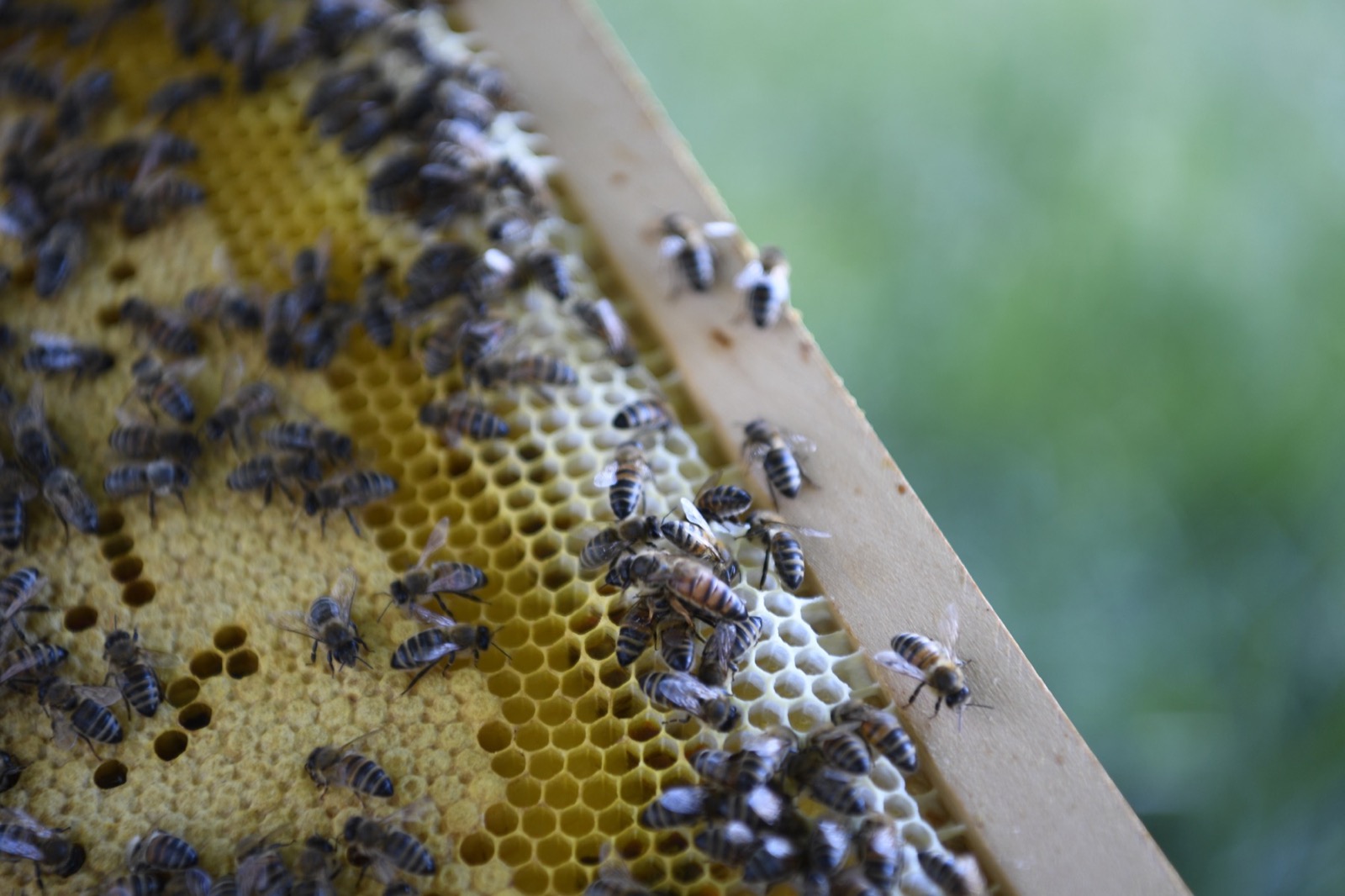
Our apiary is located at Ferme de Bassenges in Ecublens, canton of Vaud, Switzerland. Every jar comes from our own colonies and is extracted and prepared by the beekeeper in small seasonal batches.

Rather than aiming for a honey that tastes identical every year, we preserve the individuality of each harvest. Colour, aroma, flavour, texture and crystallisation naturally vary with the seasons.

  • Our honey is raw.
  • Our hives are plastic-free.
  • Our honey is not certified organic.

At a glance

  • OriginFerme de Bassenges · Ecublens, Vaud
  • ProductionSmall seasonal batches from our own colonies
  • TraceabilityEach jar carries its harvest year and number
The landscape around the hives

The Bassenges terroir

The character of each harvest begins long before nectar reaches the hive.

Around Ferme de Bassenges, an organically managed farm, our bees forage across a mosaic of orchards, vegetable fields, berry plantings, meadows, hedgerows, gardens and wild landscapes. As flowering progresses from early spring into autumn, every harvest becomes a unique expression of the Bassenges terroir.

Ferme de Bassenges · Ecublens, VaudOpen map
  • Trees and orchards: linden, walnut, hazelnut, cherry, plum, apple, pear, maple, horse chestnut, willow and recently planted fruit trees.
  • Berry plantings: raspberries, blackberries, blackcurrants, redcurrants and mulberries.
  • Farm crops: flowering courgettes, pumpkins, cucumbers, tomatoes, aromatic herbs, seasonal vegetables and edible flowers.
  • Meadows and low-growing flowers: dandelions, white clover, wildflowers and a rich diversity of cultivated and spontaneous flowering plants.
  • Hedgerows and wild edges: brambles, elder, flowering shrubs and ivy, an especially important late-season forage source.
  • Beyond the farm: neighbouring gardens, ornamental plantings, magnolias, flowering cherries, other flowering trees and the wider landscape of Ecublens also contribute to the bees' forage.

The balance between flowering species changes continuously throughout the season. Rainfall, temperature, sunshine and the succession of blooms all influence what the bees can gather.

No two harvests are exactly alike. Their differences are the natural expression of the Bassenges terroir.

From hive to jar

Our process is intentionally simple.

  • Bees gather nectar from the surrounding landscape.
  • Honey is harvested only when the frames are ready.
  • Frames are extracted in small batches.
  • Honey is allowed to settle naturally before jarring.
  • Every jar contains 100% Swiss honey.

Good to know

Natural crystallisation is a normal characteristic of honey and varies from one harvest to another.

Every harvest naturally differs in colour, aroma and flavour.

Raw honey is not suitable for infants under 12 months.

Ferme de Bassenges · Seasonal harvests · Traceable origin

Harvest traceability

Each jar carries its harvest year and harvest number. Together they identify a particular season at Bassenges and link every jar to its place of origin.

Rather than blending different years or harvests together, we preserve each one separately. Every harvest reflects the unique combination of weather, flowering and bee activity that shaped it.

Summer 2026 · 02

Summer 2026 was exceptionally warm and dry. Prolonged periods of heat alternated with thunderstorms that briefly renewed nectar flows around Bassenges before the return of dry conditions.

Around the farm, the bees followed the progression from linden into brambles, white clover, flowering vegetable crops, gardens and the rich diversity of midsummer flowers.

This harvest reflects the resilience and abundance of the Bassenges terroir during an extraordinary summer.

Spring 2026 · 01

Spring arrived unusually early. Warm, dry weather accelerated the flowering of willow, cherry, plum, apple and pear trees, followed by berry blossoms, dandelions and spring meadows.

Collected before the summer linden bloom, this harvest preserves the bright floral character of an exceptionally early spring.

Summer 2025 · 03

By midsummer, the landscape had reached its full diversity. Following the linden bloom, bees foraged among brambles, white clover, flowering vegetable crops, gardens and the rich variety of wildflowers surrounding Ferme de Bassenges.

This harvest reflects the warmth and richness of a remarkable Swiss summer.

Spring 2025 · 02

An exceptionally warm June brought an early transition into summer. Flowering meadows, white clover and berry plants were joined by the first linden blossoms, creating a richer and more varied nectar flow than earlier in the season.

This harvest captures the changing landscape as spring gives way to summer.

Spring 2025 · 01

The first harvest of the season reflects the awakening of the Bassenges landscape. Bees foraged among flowering willow, cherry, plum, apple and pear trees, berry blossoms, dandelions and the rich diversity of spring meadows.

Collected before the linden bloom, this honey captures the freshness and delicacy of late spring.